
Performance SEO in Australia How to Rank in Google and Turn Search Traffic into Revenue
Performance SEO is a revenue driven SEO framework that aligns commercial intent, technical structure, internal authority, and conversion tracking so organic visibility produces measurable business growth. Unlike standard SEO that reports rankings and traffic, Performance SEO prioritises pages that satisfy buyer intent, consolidate topical authority through internal linking, and prove outcomes through tracking. To win in competitive Australian markets, your site must map keywords to dedicated landing pages, remove technical barriers, build supporting content that answers buyer questions, and measure enquiries by page and query theme. Rankings are only valuable when they create revenue.
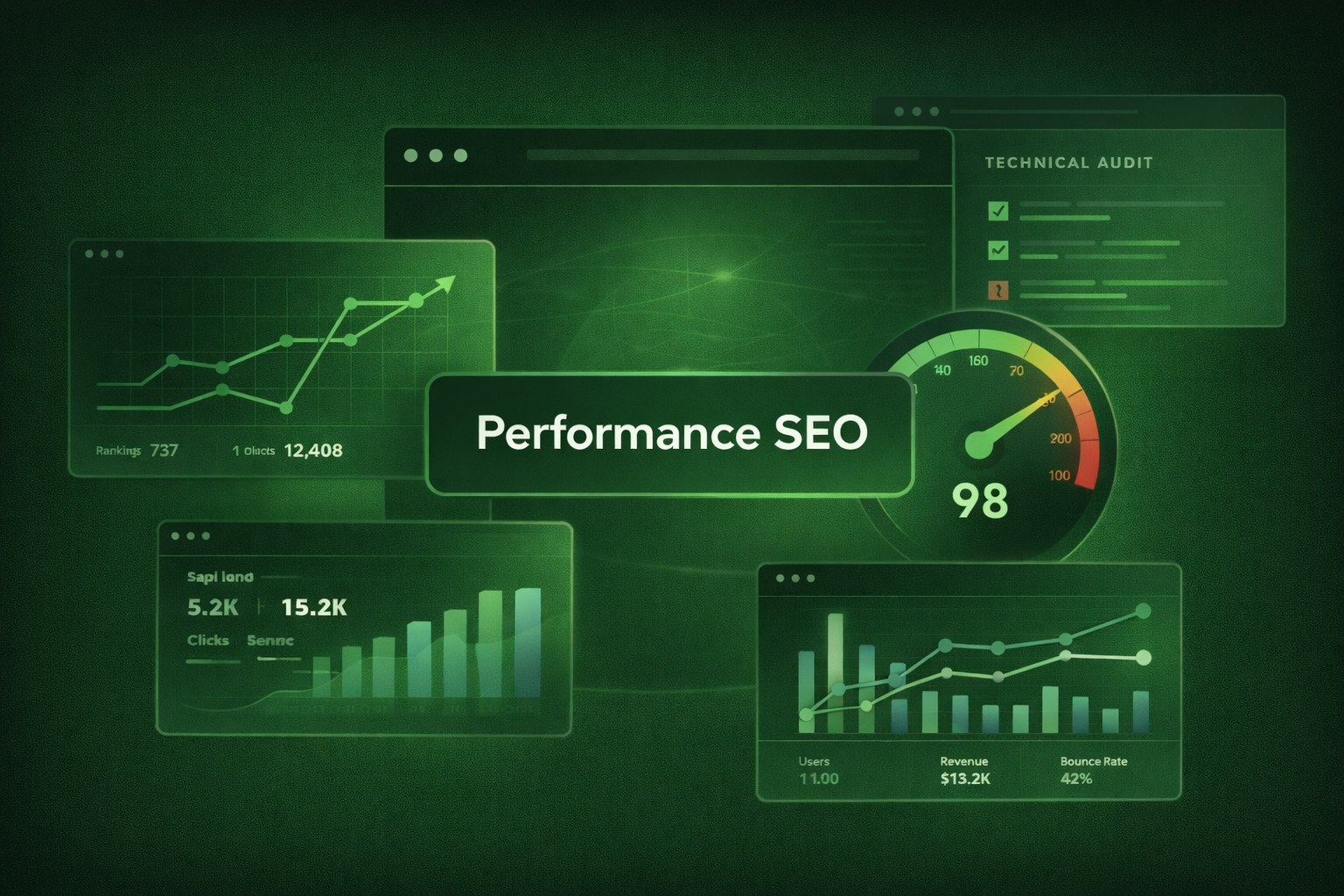
What Is Performance SEO?
Performance SEO is SEO built for outcomes. It focuses on commercial intent keywords, clean technical foundations, internal authority flow, and conversion measurement so search traffic becomes enquiries and sales.
It ensures your website is:
- Aligned to buyer intent
- Structurally accessible to crawl and index
- Built around dedicated revenue pages
- Internally linked for authority consolidation
- Designed for conversion clarity
- Measured through attribution and reporting
View the full services framework and where Performance SEO fits across your visibility and conversion stack.
Standard SEO asks:
"Can we rank for this keyword?"
Performance SEO asks:
"Will this ranking generate measurable enquiries?"
That shift changes what you build.
How Google Ranks Commercial Pages in Competitive Markets
Google ranks commercial pages based on intent satisfaction plus structural confidence signals. In practice, your page wins when it demonstrates:
- Clear intent match for the query
- Strong on page structure and headings
- Internal linking that consolidates authority
- Fast, mobile friendly page experience
- Trust and proof signals on and off site
- Clean crawl and index accessibility
If your service page is vague, slow, or unsupported by internal links, Google assumes lower satisfaction probability. Performance SEO removes ambiguity and builds the structure that ranking systems reward.
How to Rank for High Intent Keywords in Australia
High intent searches signal a buyer close to action. These queries commonly include:
- service near me
- service cost Australia
- best service in Melbourne
- service company Australia
- request a quote
To rank for these terms, your page must open with a direct definition, answer key buyer questions, prove credibility, and make the next step obvious. Performance SEO is not just traffic. It is conversion clarity.
Performance SEO vs Standard SEO: What Is the Difference?
Standard SEO measures visibility. Performance SEO measures outcomes. The table below maps what changes when you optimise for revenue rather than reports.
| Dimension | Standard SEO | Performance SEO | Priority |
|---|---|---|---|
| Primary goal | Rankings and traffic growth | Enquiries and revenue outcomes | Performance |
| Keyword selection | Broad coverage and volume | Commercial intent and margin focus | Performance |
| Page strategy | More pages, general content | Dedicated landing pages with intent satisfaction | Performance |
| Internal linking | Basic navigation linking | Authority consolidation to revenue pages | Performance |
| Measurement | Traffic and rankings | Calls, forms, attribution by page and theme | Performance |
| Reporting focus | Position changes and impressions | What drove enquiries and what did not | Performance |
The Complete Performance SEO Framework
This page serves as the complete framework.
View Chad Scales service delivery built on this exact structure for Australian businesses.
Intent Driven Keyword Mapping
Map each commercial keyword theme to a single dedicated page.
- Prioritise high value services
- Separate informational and commercial intent
- Avoid overlapping pages targeting the same theme
- Align page structure to buyer decision stage
Revenue Page Architecture
Every service page should include the sections Google and buyers expect.
- Direct service definition
- Audience and use cases
- Problems solved and outcomes
- Process steps
- Proof signals such as results and reviews
- FAQs for objection removal
- Clear call to action
Technical SEO Foundation
Remove friction that prevents crawling, indexing, and fast rendering.
- Core Web Vitals improvements
- Mobile friendly layout
- Canonical and index control clarity
- Structured headings and clean HTML
- Site architecture and URL hygiene
Internal Linking Architecture
Use internal links to consolidate authority to revenue pages.
- Every supporting guide links to its service page
- Use descriptive anchors tied to the theme
- Eliminate orphan pages
- Build logical clusters around each service
Topical Authority Content
Publish buyer question guides that strengthen rankings and conversions.
- Cost guides
- Comparisons and alternatives
- Timelines and expectations
- Common mistakes and red flags
- Process and compliance explanations
Conversion Tracking and Attribution
If you do not track conversions, you cannot run Performance SEO.
- Form conversion tracking
- Call tracking where relevant
- Landing page attribution
- Reporting by service theme not vanity metrics
How Much Does Performance SEO Cost in Australia?
Performance SEO investment varies by site size, competition level, and how much structural work is required. The core cost drivers are technical fixes, revenue page rebuilds, internal linking architecture, content expansion, and tracking setup.
The three primary investment categories are outlined below.
Keyword mapping, technical audit, conversion review, and a prioritised implementation plan for revenue outcomes.
Technical fixes, service page rebuilds, internal linking architecture, and conversion tracking setup.
Authority building content, iterative optimisation, reporting, and continued consolidation to high value revenue pages.
For scope specific pricing, contact Chad Scales directly.
Common Performance SEO Mistakes Australian Businesses Make
These are the structural failures that prevent rankings from producing revenue outcomes.
Optimising for traffic not intent
Volume keywords can inflate visits without creating enquiries. Performance SEO starts with commercial intent and buyer decision queries.
One page targeting many services
When a page is trying to rank for everything, it ranks for nothing. Dedicated service pages create clarity for Google and buyers.
No internal linking strategy
Supporting content must funnel authority to revenue pages. Without internal links, authority stays fragmented and rankings stagnate.
Slow pages and technical friction
Weak page experience reduces ranking stability and conversion rate at the same time. Speed and structure are non negotiable.
No conversion tracking
If you cannot measure calls and forms by page, you cannot know what is working. Rankings without attribution are guesswork.
Content that does not answer buyer questions
Competitive markets reward pages that reduce decision friction. Your content should answer cost, timelines, comparisons, and objections directly.
What To Do Now Even Without Hiring Anyone
If you want immediate action:
Choose one commercial keyword theme per page
Stop overlapping pages. Map one theme to one page and align headings to intent.
Rewrite one service page for conversion clarity
Open with a direct definition, add process and outcomes, include FAQs, and make the next step obvious.
Improve page speed and mobile layout
Performance affects rankings and conversion rate. Fix the friction first.
Build internal links to your revenue pages
Every supporting article should link to the service page it supports using descriptive anchor text.
Write one buyer question guide
Answer a cost or comparison question directly, then link back to your service page.
Track your form and call conversions
Set up conversion tracking so optimisation decisions map to enquiries, not assumptions.
These changes alone increase performance and measurability.
This Page Is the Pillar. These Are the Supporting Guides.
Supporting pages build topical authority and link back to the pillar. This structure helps Google understand which pages should rank for commercial intent.
Performance SEO
The complete framework. Supporting guides link here and consolidate authority to this page.
Frequently Asked Questions
What is Performance SEO?
Performance SEO is a revenue driven SEO approach that prioritises commercial intent keywords, technical structure, internal authority, and conversion tracking so organic traffic produces measurable enquiries.
How is Performance SEO different from standard SEO?
Standard SEO often focuses on rankings and traffic. Performance SEO focuses on intent alignment, landing page structure, internal linking, and measurement so results map to revenue outcomes.
How long does Performance SEO take in Australia?
Technical and on page improvements can influence visibility within weeks. Strong competitive gains typically build over 8 to 16 weeks as authority and internal linking consolidate.
Is Performance SEO worth it for small businesses?
If your revenue depends on online discovery, Performance SEO is foundational because it connects rankings to enquiries and removes guesswork from optimisation.